
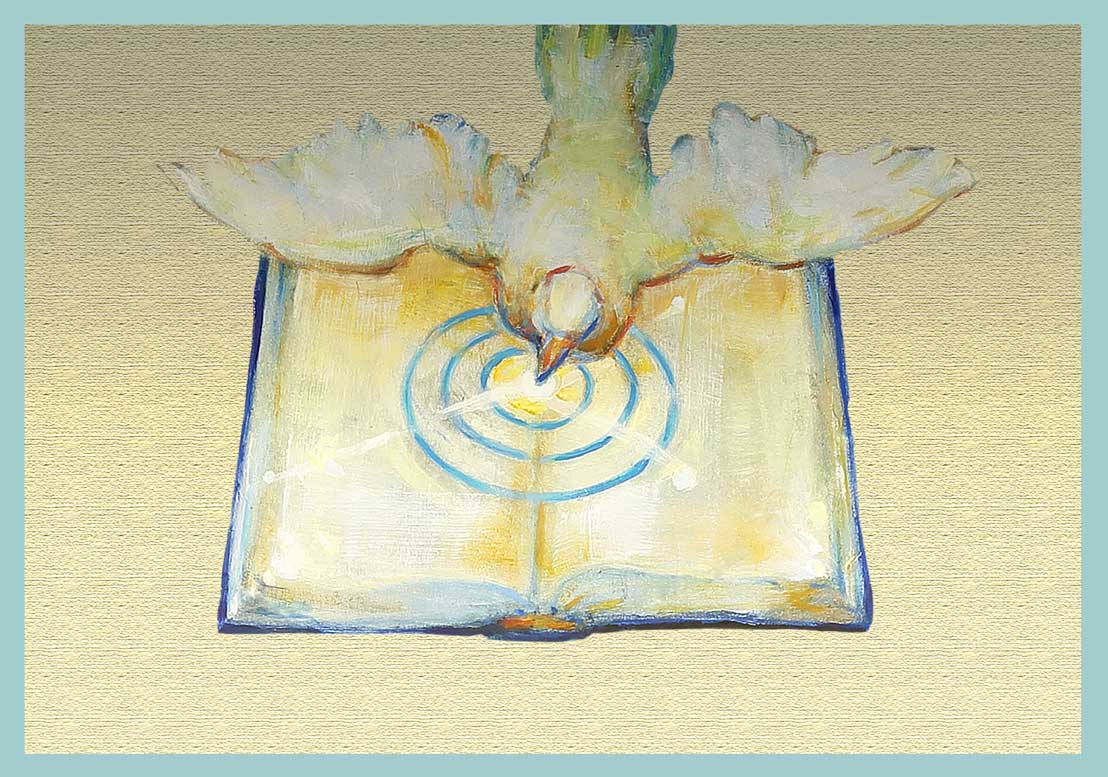
“The prophets have all taught you that Yahweh cares for his people, that God loves Israel. But I have come among you to proclaim a greater truth, one which many of the later prophets also grasped, that God loves you—every one of you—as individuals. All these generations have you had a national or racial religion; now have I come to give you a personal religion.”
Jesus in Capernaum 145:2:4
One of the biggest problems with the way the Master’s teachings have come down through Christianity is that they’re so often put through the lens of the very God concepts he came to deliver us from. His portrayal of God is startlingly intimate. It puts to rest the idea of an all-knowing but innately untrustworthy Deity who plays shell games with his will but still has the inclination to condemn you to eternal torture if you run afoul of it.
It removes him from that omniscient but seemingly callous perch in the sky and places him directly within you as a loving Source to work out your soul’s journey with, step by step, subject to your own pace and will.
This does several things. One is to put the onus of religious responsibility back onto the individual. Religion is no longer a social contract that requires the ‘correct’ collective interpretation of events for the deciphering of the Creator’s will in order to stay aligned. It removes any need for either authoritative or sacrificial intermediaries–and makes you responsible for your own sins. The individual is also the one responsible for contacting God through prayer, meditation and worship and the good news of the gospel is that he’s a loving, contactable Source and Center within.
The Urantia Book reveals five points that are the cardinal features of the Master’s gospel and the first is the pre-eminence of the individual. While this may seem counter-intuitive in relation to selflessness, it has everything to do with the actual location of the Father in relation to us. The most direct line to God is through the divine fragment living in the mind. This presence is not only the Source of the individual but is also the connecting link to all other creatures and creations. ‘The kingdom of heaven is within.’
The second feature is that of the individual’s free will as a deciding factor in their own primary relationship to Source. Soul making is collaborative. Once it’s understood that the motives of Deity are innately good and that divine values are an appropriate way of recognizing and aligning to will, the door is opened to freely and spontaneously align to it without fear of getting it wrong. In fact, alignment to truth, beauty and goodness through a loving spirit frees the soul to move as it will.
“My Father does not require of you as the price of entering the kingdom of heaven that you should force yourself to subscribe to a belief in things which are spiritually repugnant, unholy and untruthful. It is not required of you that your own sense of mercy, justice and truth should be outraged by submission to an outworn system of religious forms and ceremonies. The religion of the spirit leaves you forever free to follow the truth wherever the leadings of the spirit may take you. And who can judge—maybe this spirit may have something to impart to this generation which other generations have refused to hear?”
Jesus at the rock near Luz 155:6:5
Innate within this teaching is that all of us souls have the freedom to be moved by truth however the spirit directs. That means there are as many spontaneous and blessed paths to the First Source and Center as there are people. Religion is no longer allowed to rest in dead or passive forms–and respect for the spiritual lives of others, however different from your own, is implicit. There is no ‘right’ creed over another.
The third feature of the Master’s gospel is fellowship with God. Spiritual practice through prayer, meditation and worship was not only something he preached but was actively witnessed as doing all the time. His relationship with the Father was so personal. Even though he was by nature an exalted being there was real humility in his need for that spiritual connection and there’s something instructive in that for us, too.
These days it feels hard to carve out the time for spiritual practice. Life is pressing. But the Master’s way is very much through that and he would say that you simply have to engage in reflective, loving practice to locate and develop a relationship to God because it is a process dependent on human will.
The fourth feature is loving service to your brothers and sisters. In the wake of all their dramatic and transformative experiences with Jesus, the apostles were so distracted by the overwhelming nature of what had happened with him that they quickly defaulted to ascribing brotherhood only to those who similarly believed in his divinity. Their idea of fellowship became proscribed and they lost sight of his teaching about spiritual brotherhood being founded on a deeper recognition of the spiritual Source within that pertains to everyone you meet, regardless of their creed. Thus, a religion about Jesus supplanted the actual religion of Jesus.
While your religion is a matter of personal experience, it is most important that you should be exposed to the knowledge of a vast number of other religious experiences (the diverse interpretations of other and diverse mortals) to the end that you may prevent your religious life from becoming egocentric—circumscribed, selfish, and unsocial.
The Urantia Book 103:1:3
If all men and women are your potential spiritual brothers and sisters, your obligation is to be open to serving them all. This changes the dynamic around any shared belief as being a necessary foundation for universal brotherhood. Concrete, agreed upon creeds are no longer a vital prerequisite to operating in service to God. And all work becomes potentially sacred as the seat of divinity is freed up from ecclesiastical authority and placed within the consecrated, serving individual.
The fifth feature of the gospel, the transcendency of the spiritual over the material in human personality, is an experience that culminates from the other four. As the soul evolves, it gains ascendency, and becomes witness to its own transformation. Spiritual realities become increasingly real